The Central African Republic (CAR) has faced recurrent coups and armed contestation since independence, with the 2013 Séléka seizure of power and ensuing Anti-Balaka violence shaping the present conflicts. Despite elections and peace initiatives, ex-Séléka and Anti-Balaka actors, including within Coalition of Patriots for Change (CPC) and the splinter CPC-Fondamentale (CPC-F), have continued to challenge central authority. Government forces, assisted by the UN Multidimensional Integrated Stabilization Mission in the Central African Republic’s (MINUSCA) and supported, in particular, by Rwanda and Africa Corps, have reconsolidated territory amid allegations of abuses and intensified foreign involvement. During the reporting period, the Security Council lifted the arms embargo and renewed MINUSCA’s mandate, Rebel fragmentation, a limited truce with Return, Reclamation, and Rehabilitation (3R) and Unity for Peace in the Central African Republic (UPC), which led to the end of the CAR-UPC hositlities by June 2026, spillover from Sudan, low intensity attacks from additional non-State actors and restrictive constitutional changes enabling Touadéra’s re-election to a third term in the December 2025 elections have contributed to ongoing instability and humanitarian emergency.
Classifications and Parties to the Conflicts
- Non-international armed conflict between CAR and Return, Reclamation, and Rehabilitation (3R)
- Non-international armed conflict between CAR and Unity for Peace in the Central African Republic (UPC) (ended June 2025)
- Non-international armed conflict between CAR and Coalition of Patriots for Change (CPC – Coalition des patriotes pour le changement)
- Non-international armed conflict between CAR and Coalition of Patriots for Change-Fondamentale (CPC-F)
- Non-international armed conflict between CAR and Azande Ani Kpi Gbe non-formés (AAKG non-formés) (supported by Wagner Ti Azande (WTA))
- Non-international armed conflict between Unity for Peace in the Central African Republic (UPC) and Azande Ani Kpi Gbe non-formés (AAKG non-formés) (ended August 2024)
During the reporting period in CAR, parties to the armed conflicts deliberately targeted civilians, often on ethnic or religious grounds, including in areas around mining sites and transhumance corridors, and used improvised explosive devices (IED) that continued to threaten civilians and raise concerns under IHL rules on distinction, proportionality and precautions. Forced displacement remained pervasive, with around one in five Central Africans uprooted, despite a national strategy on durable solutions. Humanitarian convoys and facilities were attacked and cattle rustling by state forces undermined livestock as objects indispensable to the survival of civilian survival. Persons in the power of parties to the conflicts suffered repeated killings, summary executions, arbitrary detention in dire conditions and widespread conflict-related sexual violence, including rape, gang rape, sexual enslavement and forced marriage, while children were disproportionately affected through grave violations, notably large-scale recruitment and use by armed groups, including in combat roles.
Historical Background
Origins
Since independence in 1960, the Central African Republic (CAR) has faced recurrent political unrests marked by multiple coups and a recent attempted coup in late 2022. Notably, in March 2013, the predominantly Muslim Séléka coalition seized Bangui and ousted François Bozizé, after which Michel Djotodia claimed the presidency. This seizure of power remains the backdrop to the current hostilities.
Escalation of violence and international response
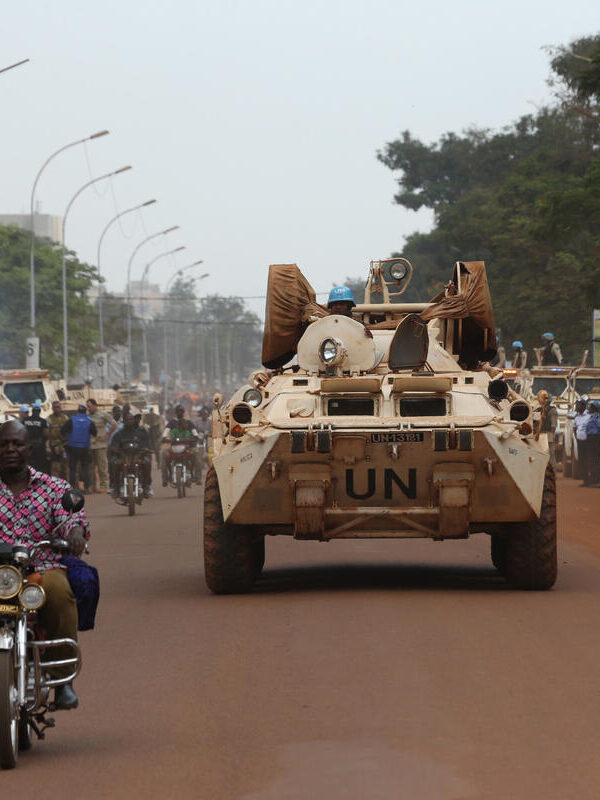
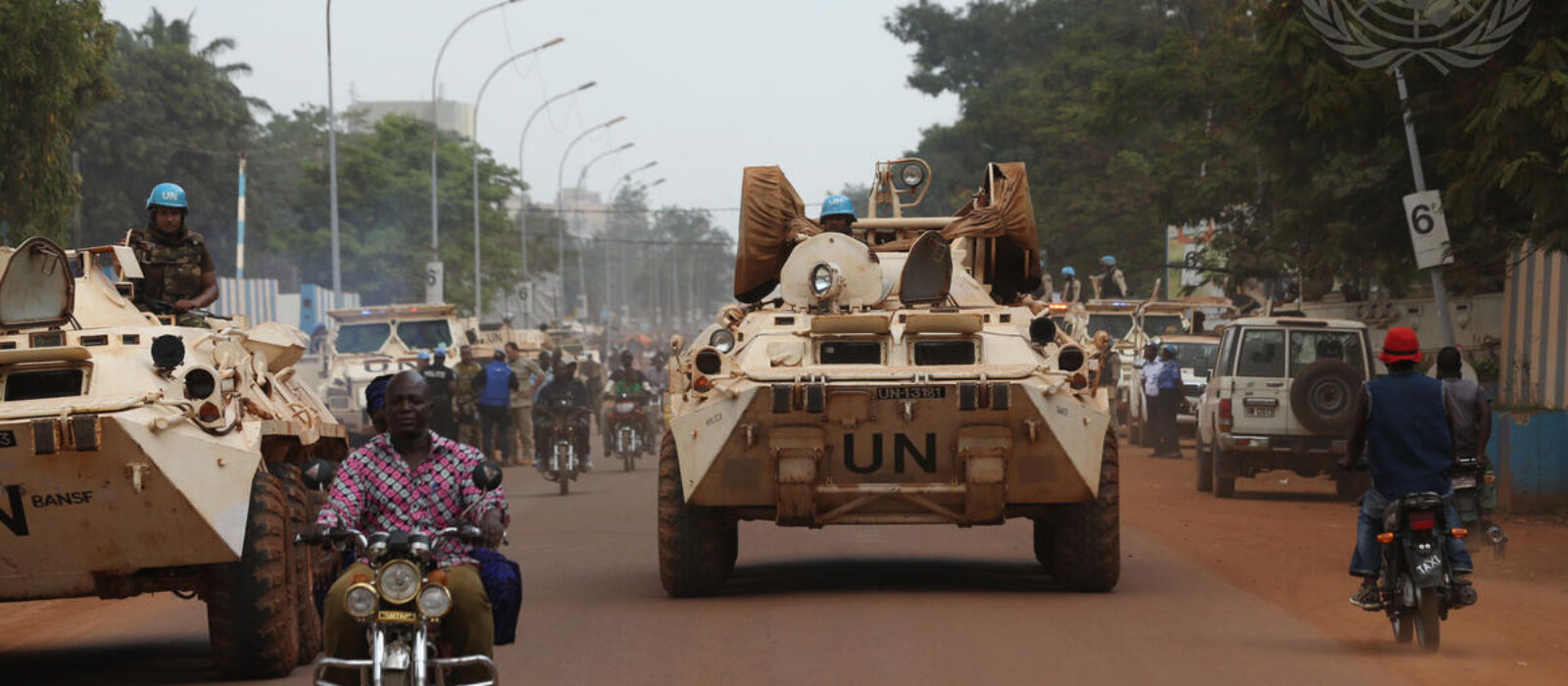
Séléka abuses prompted the emergence of Anti-Balaka coalitions of Christian fighters, whose violence against Séléka forces and Muslim civilians entrenched a sectarian dynamic and generated mass killing and displacement. Following Djotodia’s removal in January 2014 through a joint initiative by France and Chad and the establishment of a transitional arrangement involving former belligerents, insecurity persisted that included violent persecution of the Muslim population perceived as supporting Séléka groups. In 2014, the UN Security Council authorized the deployment of the UN Multidimensional Integrated Stabilization Mission in the Central African Republic (MINUSCA) to protect civilians and disarm militias, yet the mission has faced sustained attacks.
Political developments and armed group fragmentation
Following the 2016 elections, Faustin-Archange Touadéra assumed office, but armed groups retained significant territorial influence, and peace agreements in 2017 and 2019 had limited effect. Reports attributed serious international crimes to both ex-Séléka and Anti-Balaka elements. In late 2020, the Coalition of Patriots for Change (CPC), comprising former Séléka and anti-Balaka elements, challenged the December elections and unsuccessfully attacked Bangui in early 2021.
External support and current dynamics
After defeating CPC’s advance on Bangui with assistance from MINUSCA, government forces consolidated their gains with the support of Rwandan soldiers and Wagner Group. Allegations of violations accompanied territorial reconquest and geopolitical competition between Russia and Western nations intensified around institutional influence and natural resources. Armed groups, though weakened and divided, continue guerrilla operations amid fluctuating violence. Elections in December 2025 led to a victory for the incumbent president, Touadéra.
Humanitarian situation
A persistent humanitarian emergency endures alongside spillover from Sudan, with extensive poverty, large-scale assistance needs, and continued, though slightly decreasing, internal displacement, as well as a refugee influx, mostly from Sudan. Humanitarian access continues to be limited due to the presence of armed groups, the lack of infrastructure, and the presence of unexploded ordnance in some western prefectures.
Key Developments (2023-2026)
The reporting period saw several major developments:
- Transition from Wagner Group to Africa Corps: After Yevgeny Prigozhin’s death, Russia sought to replace Wagner Group with Africa Corps under the command of the Russian Ministry of Defence, but the transition in CAR remained contested, costly and incomplete. Wagner-affiliated personnel continued to operate in security and trade networks, while President Touadéra reportedly accepted a gradual replacement of Wagner Group with Africa Corps by late 2026.
- The struggle for influence between Western countries and Russia as well as the diversification of economic and security partnerships: Russia, France, the United States, Rwanda, Uganda, Chad and the United Arab Emirates competed or engaged with the Central African Republic through security, military, economic and diplomatic initiatives. Bangui pursued diversified partnerships while Russia intensified military support and anti-Western narratives.
- Lifting of the United Nations (UN) Security Council arms embargo on CAR: The UN Security Council lifted the arms embargo on government forces in 2024, a decision welcomed by the authorities and criticized by parts of the opposition.
- Mixed transitional justice record and International Criminal Court (ICC) proceedings: The Special Criminal Court remained active despite funding constraints, issuing warrants, convictions and reparations, while ICC proceedings continued alongside domestic admissibility claims.
- Renewals of UN Multidimensional Integrated Stabilization Mission in the Central African Republic’s (MINUSCA) mandate: MINUSCA’s mandate was renewed, though its personnel were reduced and base closures created security concerns.
- Developments related to December 2025 presidential elections: The new constitution enabled Touadéra’s third term, amid opposition contestation and pressure on rivals.
- Internal friction in the rebel coalition led to a split between CPC and CPC-F: The founder of the Unity for Peace in the Central African Republic (UPC), General Ali Darassa, ceasefire declaration fractured the Coalition of Patriots for Change (CPC) and produced the CPC-Fondamentale (CPC-F).
- Government truce with armed groups Return, Reclamation, and Rehabilitation (3R) and Unity for Peace in the Central African Republic (UPC) and return of the Mouvement patriotique pour la Centrafrique/Central African Patriotic Movement (MPC) to 2019 peace agreement: Truces and demobilization advanced symbolically, but insecurity persisted.
- Sudan civil war spill-over: Rapid Support Forces (RSF) incursions and Arab militias activity destabilized Vakaga prefecture despite local mediation.
- The Military Coalition for the Salvation of the People and Redress (CMSPR): Military Coalition for the Salvation of the People and Redress CMSPR attacks on Central African armed forces (FACA) remained sporadic and below the intensity threshold for a NIAC.
Non-International Armed Conflicts
Central African Republic vs 3R
The pre-existing NIAC between CAR and 3R continued as of May 2026, with FACA supported by the Wagner Group/Africa Corps, while MINUSCA provided security assistance without a combat role. Established in 2015 and later integrated into the CPC coalition, 3R remained a distinct party to the conflict. The N’Djamena Agreement of April 2025 and the July 2025 declaration of dissolution marked relevant peace efforts, but did not suffice to end the conflict, as tensions persisted, hostilities remained possible, and 3R continued to exist. The intensity threshold was reached through repeated clashes and attacks involving FACA, support forces and 3R, causing casualties, civilian harm, infrastructure destruction and displacement. Despite territorial losses and partial demobilization, 3R retained remote bases, used portable weapons, improvised explosive devices and landmines, and remained militarily active. Its political and military divisions, hierarchical command structure, identifiable leadership, local cells, planning capacity, supply networks and illicit financing further demonstrate the required degree of organization, enabling discipline and sustained operations.
CAR vs UPC
The NIAC between CAR and the UPC continued from August 2023 up to the end of June 2025. FACA fought the UPC with Wagner Group/Africa Corps support, while MINUSCA provided security assistance without a combat role. The UPC, led by Ali Darassa, joined the CPC and later the CPC-F, but also carried out bilateral hostilities against FACA. The April 2025 peace agreement and July 2025 declaration of dissolution marked de-escalation, but did not establish that all UPC structures had disappeared. The intensity threshold was met through repeated clashes, attacks on military bases, territorial contests, casualties, destruction, displacement and continued reliance on Wagner support. The organization criterion was satisfied by the UPC’s leadership, hierarchical military command, thousands of ranked fighters, logistical capacity, external weapon sourcing, unity of voice and spokesperson. However, the subsequent drop in intensity indicates that the non-international armed conflict ended in June 2025 at the latest.
CAR vs CPC
The pre-existing NIAC between CAR and the CPC continued as of May 2026, with FACA supported by the Wagner Group/Africa Corps. Formed in 2020 to oppose President Touadéra and Russian paramilitaries, the CPC later fragmented, notably through the departure of the MPC, the creation of the CPC-F, and 3R’s reintegration into the peace process, leaving the alliance altered but not dissolved. The intensity threshold remained satisfied through frequent clashes, coordinated attacks, casualties including civilians, destruction of homes and villages, displacement, and the use of improvised explosive devices, grenades and landmines. The temporary lull in fighting after January 2025 did not necessarily indicate the end of the conflict. For organization, the Anti-Balaka Ndalé faction is sufficiently organized through its cellular command structure, leadership, logistical capacity, prior territorial influence, ability to negotiate ceasefires and unity of voice. The CPC alliance also retained sufficient coordination through a common leadership structure, appointments to military and political roles, and continued capacity to coordinate attacks and joint operations against FACA.
CAR vs CPC-F
The CPC-F emerged as a splinter of the CPC on 30 August 2024 after internal tensions over a ceasefire announcement by Ali Darassa, leader of the UPC and former Chief of Staff of the CPC, and his subsequent dispute with François Bozizé, former CAR President and general coordinator of the CPC. The CPC-F later resumed hostilities against government forces and reiterated its objective of overthrowing the CAR government. FACA fought the CPC-F with Wagner Group/Africa Corps support. The intensity threshold was met through repeated clashes from late 2024 into early 2026, including coordinated attacks on FACA outposts, destruction and looting of civilian property, displacement, seizure of military equipment, and armed retaliation involving Wagner forces. For organization, the relevant CPC-F members, namely the Popular Front for the Renaissance of the Central African Republic (FPRC), Anti-Balaka Mokom faction and MPC, were sufficiently organized through identifiable leadership, command structures, logistical capacity, weapons access, financing and unity of voice. The CPC-F itself also had a coordination structure, senior appointments, communiqués, synchronized attacks and joint military operations. Accordingly, a new NIAC between CAR and the CPC-F arose in the second half of 2024 and is still ongoing.
CAR and AAKG (supported by WTA)
A new NIAC between the CAR and Azande Ani Kpi Gbe (AAKG) non-formés arose in March 2025 after non-integrated AAKG fighters and ex-‘Wagner Ti Azande’ (WTA) elements, namely AAKG fighters integrated into FACA, turned against FACA, following failed incorporation into the army and opposition to government negotiations with the UPC. FACA fought AAKG non-formés with Wagner Group/Africa Corps military support and MINUSCA security assistance, while suspected AAKG members also attacked MINUSCA. The intensity threshold was reached through sustained clashes from March 2025 into 2026, prolonged fighting around Zémio, hostage-taking of a FACA soldier, attacks on convoys and checkpoints, disruption of elections, temporary capture of Bambouti, air and ground counteroperations, casualties, damage to civilian infrastructure and repeated displacement. Organization was demonstrated by AAKG’s continued operation despite partial integration into FACA, its tiered command structure, identifiable commanders, spokesperson, public statements, logistical support, political wing, training, territorial base, and capacity to plan ambushes and capture towns.
UPC vs AAKG
The NIAC between the UPC and the AAKG arose from the AAKG’s stated objective of protecting Azande communities and removing UPC territorial control in Haut-Mbomou, while the UPC responded to AAKG attacks against Muslim Fulani communities. After part of the AAKG was integrated into FACA in 2024, the conflict continued between the UPC and the remaining AAKG non-formés. The intensity threshold was met through frequent clashes in 2023 and 2024, protracted fighting, displacement, and the use of automatic rifles by AAKG and heavier weapons by the UPC. Although direct fighting decreased after July 2024, the lull did not immediately end the conflict, as AAKG continued to exist, the risk of renewed hostilities remained, and AAKG elements continued targeting Fulani civilians for alleged association with the UPC. The organization requirement was satisfied for both the UPC and the AAKG. The NIAC eventually ended in August 2024.
Parties to the Conflict
State Party
- Central African Republic (CAR)
Non-State Parties
- Return, Reclamation, and Rehabilitation (3R)
- Unity for Peace in the Central African Republic (UPC)
- Coalition of Patriots for Change (CPC)
- Coalition of Patriots for Change-Fondamentale (CPC-F)
- Azande Ani Kpi Gbe non-formés (AAKG non formés)
Other main actors
Foreign Involvement
- Wagner Group/Africa Corps [in combat alongside FACA] (Russia)
- MINUSCA [mandate extended until 15 November 2025; no active combat role]
- Russia [military support: fighter jets, weapons, training]
- United States [training soldiers]
- France [offering scholarships to army officers for training in France]
- Rwanda [offering military training]
- Chad [joint security operation along shared border]
Other Non-State Actors Involved
- Bancroft Global Development [US PMSC, no active combat reported]
- Rapid Support Forces (RSF) [repeated incursions into CAR, recruiting efforts]
ATTACKS ON CIVILIANS
In CAR, parties to the armed conflicts deliberately targeted civilians, often along ethnic or religious lines. Improvised explosive devices (IEDs) continued to threaten civilians while forced displacement remained pervasive and linked to armed conflict and related violations.
During the reporting period in CAR, parties to the armed conflicts deliberately targeted civilians. In the south-east, renewed violence in Haut Mbomou and Mbomou saw the Azande Ani Kpi Gbe (AAKG) and Unity for Peace in the Central African Republic (UPC) attack civilians, with the AAKG targeting Muslims perceived as sympathetic to the UPC. Wagner Ti Azande (WTA) and AAKG fighters also committed atrocities against civilians in Dembia and Rafai over their alleged association with UPC, targeting Muslim and Fulani communities and Sudanese asylum seekers, including killings and rape. In the north-west, Return, Reclamation, and Rehabilitation (3R) attacks in Lim Pendé killed civilians and burned down hundreds of homes.
ATTACKS ON CIVILIAN INFRASTRUCTURE
During the reporting period, humanitarian relief operations were attacked, impairing the movement of convoys and the delivery of assistance to remote communities. Cattle rustling by FACA troops undermined pastoral livelihoods and contributed to heightened tensions and insecurity along transhumance routes, raising concerns under the protection of objects indispensable to the survival of civilian population.
Attacks against Humanitarian Aid
During the reporting period in CAR, humanitarian convoys delivering assistance to remote communities were attacked, including a late March 2025 incident near Zemio in Haut Mbomou. These acts engage IHL obligations on parties to armed conflicts to facilitate the delivery of impartial humanitarian assistance. Likewise, attacks on UN Multidimensional Integrated Stabilization Mission in the Central African Republic (MINUSCA), , may amount to a war crime.
VIOLATIONS AGAINST PERSONS IN THE HANDS OF THE ENEMY
In CAR, violations against persons in the hands of the enemy included repeated killings and summary executions, as well as kidnappings and extortion affecting civilians. Detention conditions raised serious concerns, with prolonged pretrial detention, disproportionate targeting of ethnic and religious minorities, and prisons weakened by conflict, marked by extreme conditions of detention. Conflict-related sexual violence remained prevalent, including rape, gang rape, sexual enslavement and forced marriage, with women and girls regularly targeted and limited access to medical assistance. Children were disproportionately affected, with widespread recruitment and use by armed groups, including some serving in combat roles.
Murder of Civilians
Repeated killings and summary executions were reported. 3R was linked to killings of civilians outside Bocaranga in July 2024 and to the summary execution of farmers outside Bohong earlier in 2024. Suspected UPC fighters killed motorcycle taxi drivers and passengers near Kopia in Ouaka prefecture. In Nana Mambéré and Mambéré Kadéï, Anti Balaka and 3R killed, kidnapped or extorted civilians around mining sites and transhumance corridors.